
DeepSeek OCR
deepseek-ai/DeepSeek-OCR
published Oct 2025 · updated Nov 2025
DeepSeek OCR is a image-text-to-text model that compresses visual contexts via optical 2D mapping for high-accuracy OCR and document understanding.
specs
| Task | Image-Text-to-Text (OCR) |
| Architecture | DeepEncoder + DeepSeek3B-MoE-A570M Decoder |
| Parameters | 3B total (570M active) |
about this model
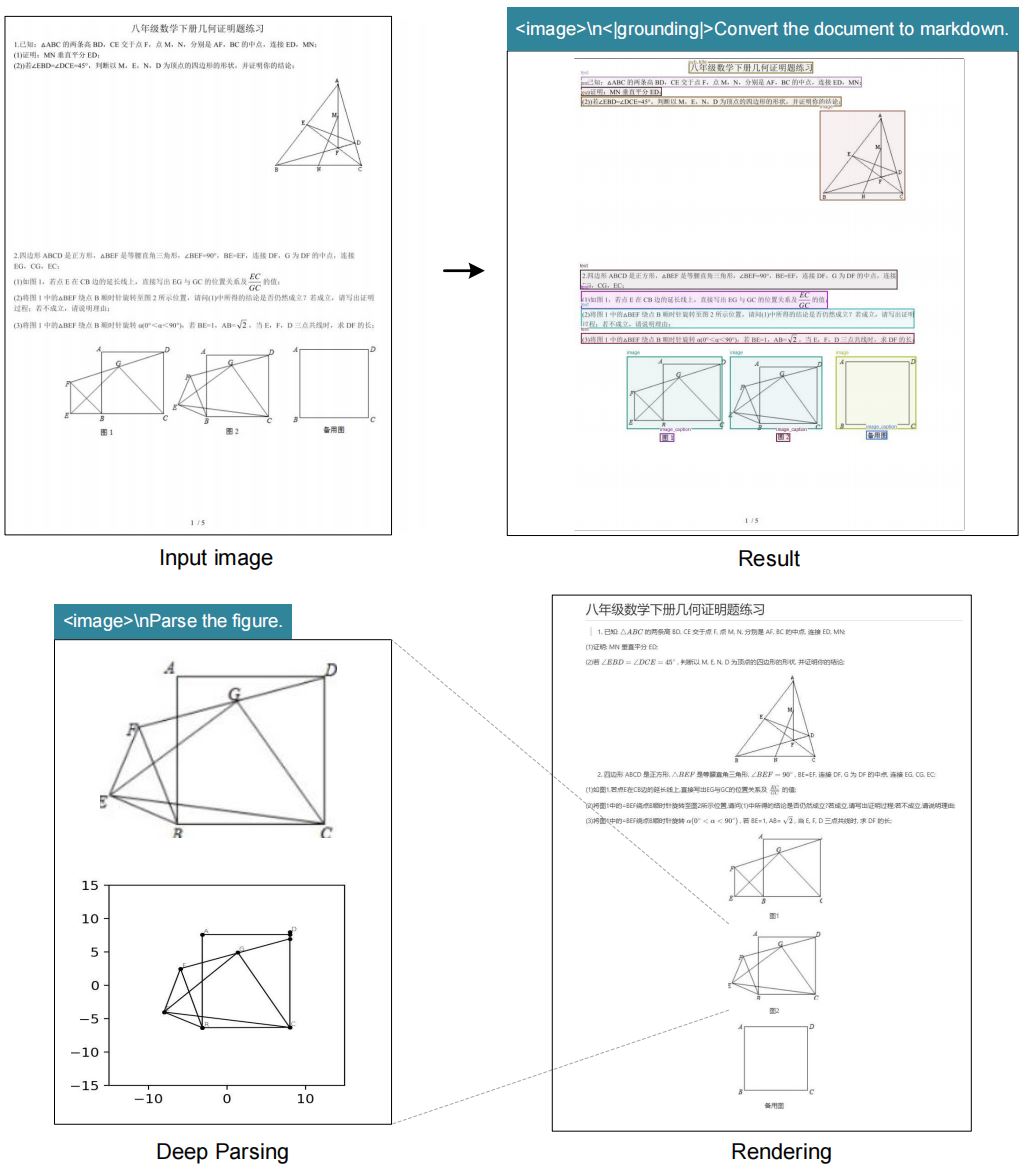
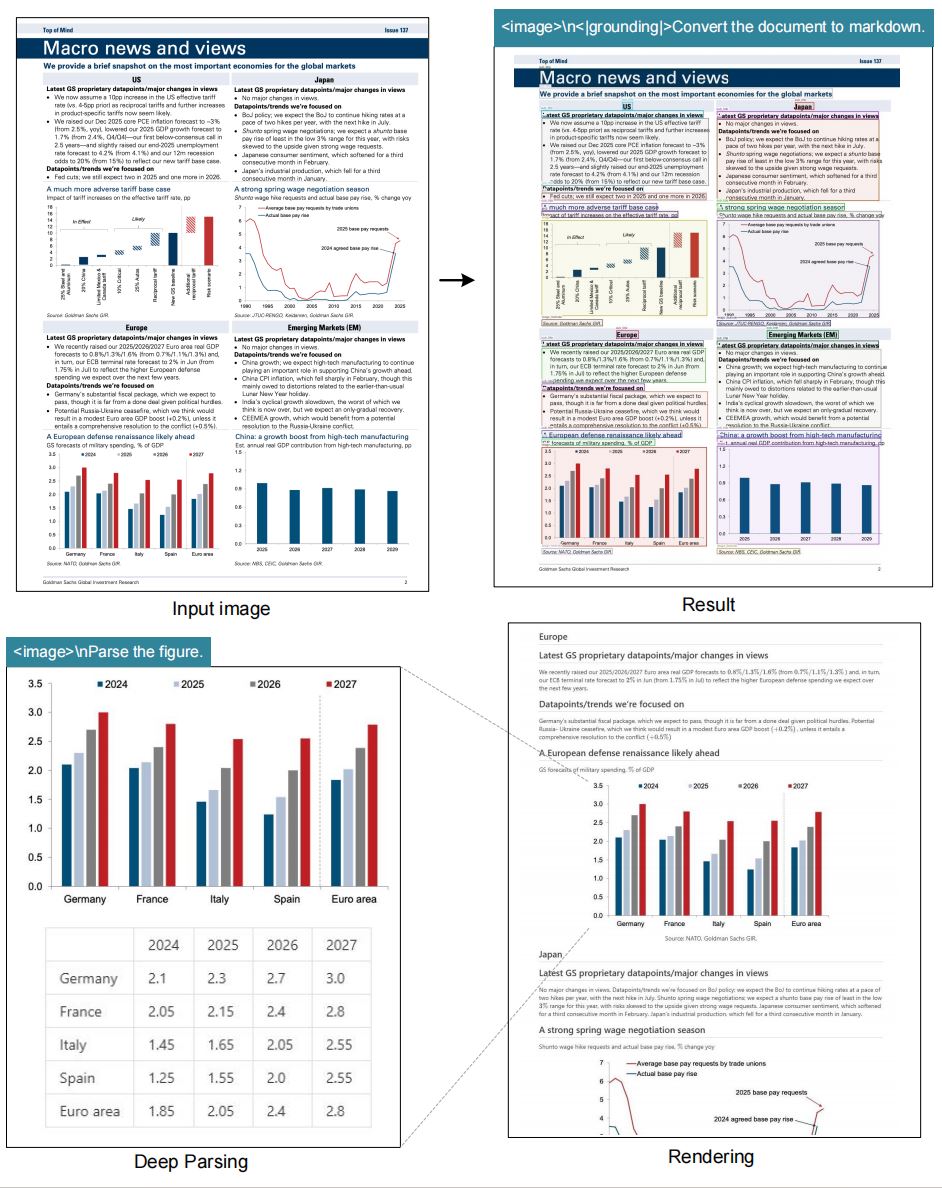
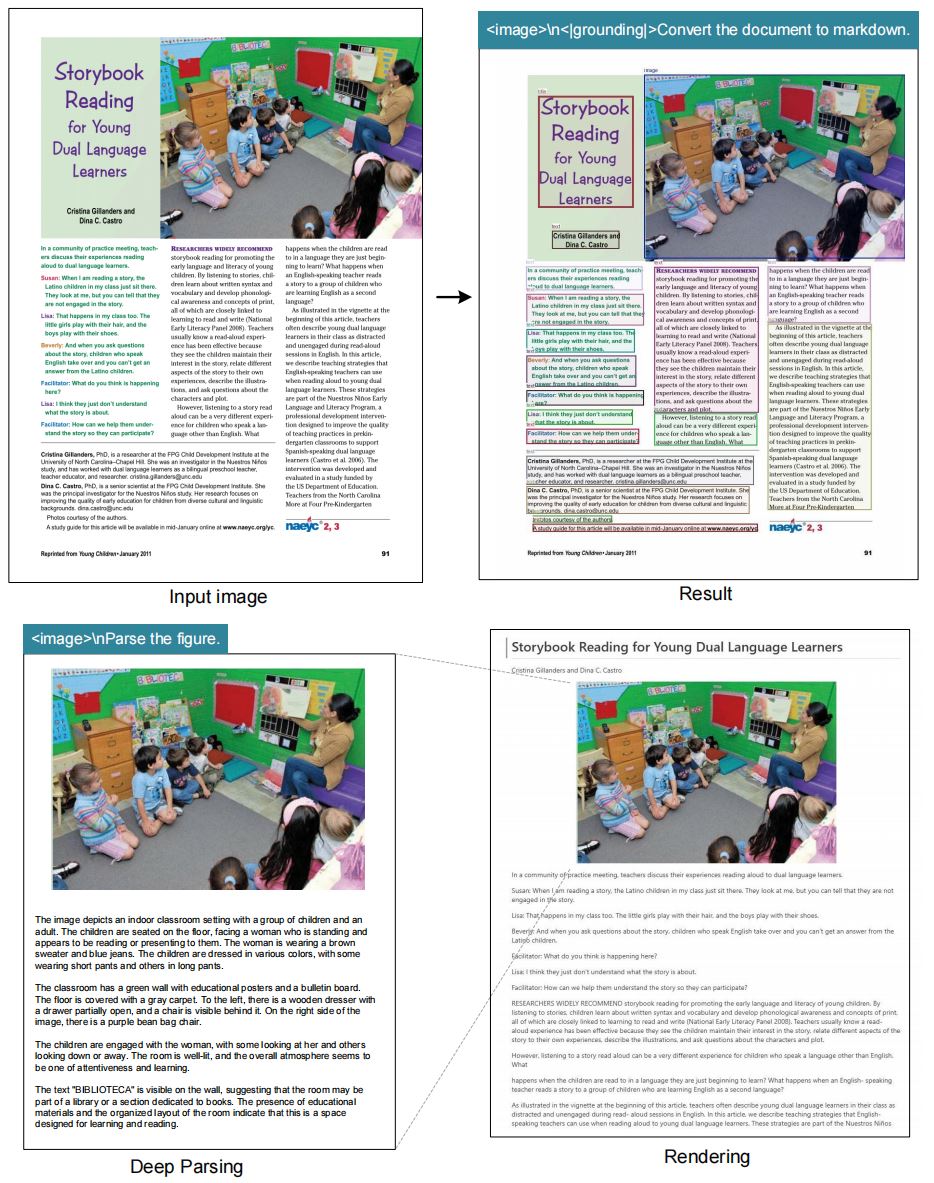
DeepSeek-OCR is an image-text-to-text model that compresses long visual contexts into a compact set of vision tokens via optical 2D mapping, enabling efficient and accurate OCR from high-resolution document images.
The model consists of two components: DeepEncoder, which maintains low activations under high-resolution input while achieving high compression ratios, and DeepSeek3B-MoE-A570M as the decoder. When the number of text tokens is within 10 times that of vision tokens (compression ratio <10×), decoding precision reaches 97%. Even at a 20× compression ratio, OCR accuracy remains approximately 60%.
Benchmark Performance
On the OmniDocBench benchmark, DeepSeek-OCR surpasses GOT-OCR2.0 (which uses 256 tokens per page) using only 100 vision tokens, and outperforms MinerU2.0 (which averages over 6000 tokens per page) while utilizing fewer than 800 vision tokens.
In production, DeepSeek-OCR can generate training data for LLMs and VLMs at a scale of over 200,000 pages per day on a single A100-40G GPU. When served via vLLM, the model achieves approximately 2500 tokens per second on an A100-40G for PDF processing. The model is also compatible with OpenAI‑style API endpoints through vLLM’s server.
Configuration presets include Tiny, Small, Base, Large, and Gundam (crop mode), each balancing resolution and token count for different document types.
Visualizations
 |
 |
 |
best for
- ·Document digitization and markdown conversion
- ·High-throughput PDF OCR at 200k+ pages per day on a single A100
- ·Generating training data for LLMs and VLMs
FAQ
It excels at high-accuracy OCR from images and PDFs, especially for long documents, achieving 97% precision when compression ratio is below 10x.
On OmniDocBench it surpasses GOT-OCR2.0 (256 tokens/page) using only 100 vision tokens, and outperforms MinerU2.0 while using fewer than 800 vision tokens.
The model accepts images via PIL (PNG, JPG, etc.) and supports variable resolutions through presets like Tiny, Small, Base, Large, and Gundam.
Use the OpenAI-compatible endpoint with your gigarouter API key; send image and prompt fields in the standard chat completions request.
The model card does not specify a license; the DeepSeek project typically uses MIT for code and a custom Model Agreement for the model weights.
# rerank documents by relevance; billed per document
curl https://gigarouter.ai/v1/rerank \
  -H "Authorization: Bearer $GR_KEY" \
  -d '{"model":"deepseek-ai/DeepSeek-OCR","query":"capital of France",
       "documents":["Paris is the capital of France.","Bananas are yellow."]}'
try it live
runs the real hosted model on a shared demo allowance · get your own key + $25 free →